
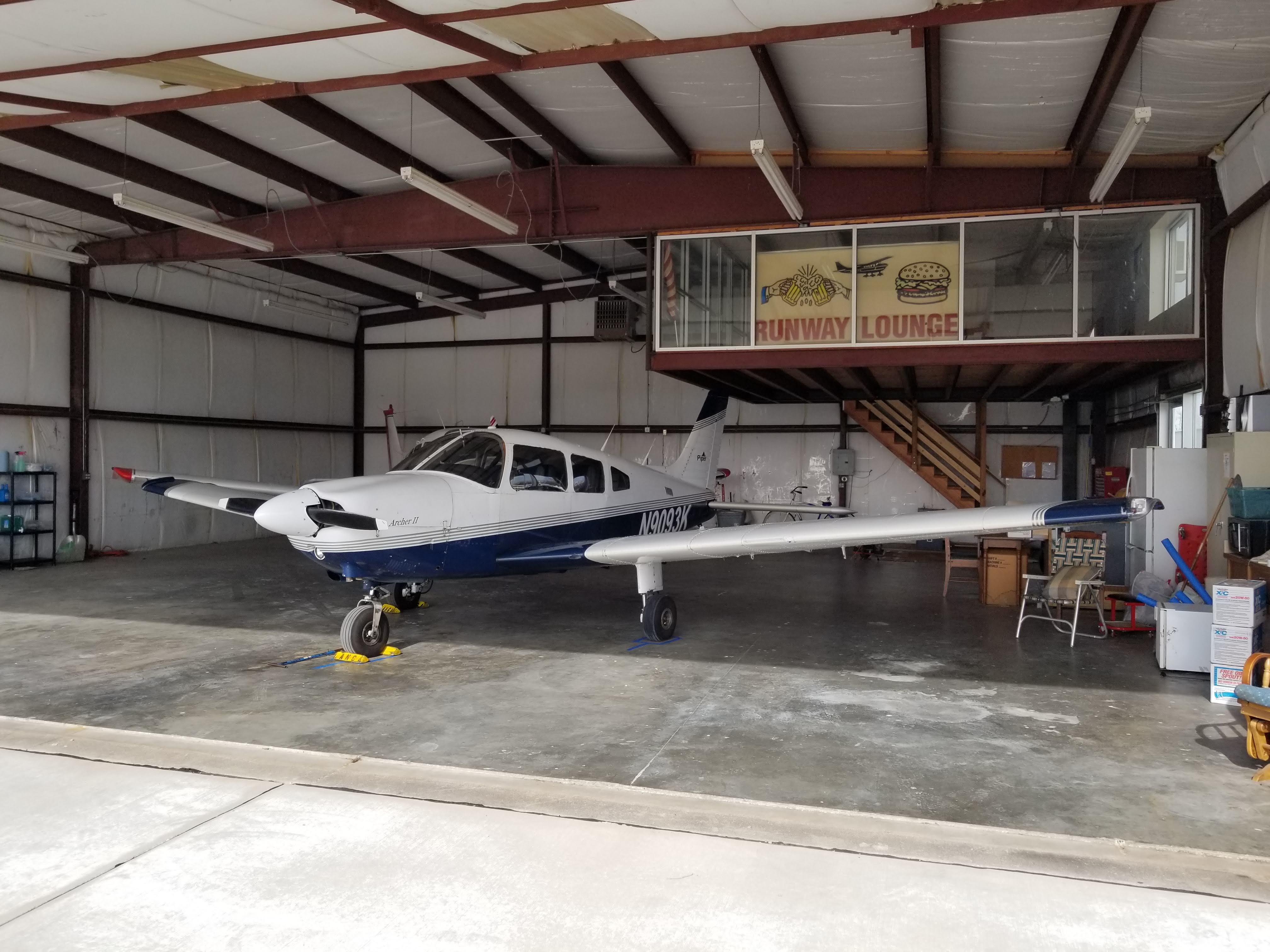
Based at Spirit (KSUS) Million Air hangar B-9. The hangar key is newer and can be a little difficult to insert, but it works.
Aircraft Maintenance Officer: Paul Getman — contact information on Flight Circle.
Club pilots: before checkout on 93K you must complete the avionics and autopilot exam. Score at or very near 100% for safety before checkout.
Fuel, oil & cleaning
Fuel to the tabs — 32 gallons usable. For a long trip, fuel as needed before departure, then return to the tabs when you hangar the airplane.
Use Phillips 66 X/C 20W-50 (blue bottle). Log accurate oil usage when checking the aircraft back in. Clean leading edges with the airframe spray and terry towels; use microfiber and window spray for the windscreen only.
Leaving the airplane
- Fasten seatbelts across the seats; stow the shoulder harness; leave the cabin neat and clean.
- Do not leave the tow bar on the nose wheel unless your hand is on it — remove it when walking away.
Important starting information
Starter limits: 10 seconds on, 30 seconds off, up to 3 tries, then a 2-minute cool-down. If it does not start after about 5 blade rotations, check fuel (too little or flooded).
Maintenance guidance: 3–4 good primes with the fuel pump on when OAT is greater than 10°C; 5–10 primes when colder. Unlock the primer, pull full aft and count 4–5 (it draws slowly), then lock fully in. Fuel pump off after start; on again before takeoff per checklist. If flooded, follow the POH flooded-start procedure.
Weight & balance
NetLeader Aviator Weight and Balance Calculator
FOR EDUCATIONAL PURPOSES ONLY
For educational purposes only. These calculators use the current basic W&B data on file for each aircraft but are not for official flight planning. As Pilot in Command, reference the aircraft POH and the current weight & balance documents for your flight. You are solely responsible for correct, accurate calculations before flight.
Graphs reflect Normal Category limits. For Utility Category, confirm CG envelope data in the POH for that aircraft. Figures do not include start, taxi, and run-up fuel credit.
Calculator tools powered by NetLeader Aviator.
Type specifications
For informational purposes only. These are typical published figures for this type and may not match this airframe exactly. Each pilot is solely responsible for flight planning against the airplane's current POH, weight and balance, and other official documentation (including Flight Circle files).
- Engine
- Lycoming O-360-A4M · 180 HP
- Propeller
- Sensenich fixed pitch · 76 in
- Cruise (75%)
- ~125 KTAS
- Fuel burn (75%)
- ~10.5 gph
- Rate of climb
- ~735 fpm
- Service ceiling
- ~13,650 ft
- Fuel
- 50 gal total / 48 usable
- Max takeoff weight
- 2,550 lbs
- Useful load (standard)
- ~1,134 lbs
- Stall (flaps down)
- ~49 KIAS
- Range (75%, w/ reserve)
- ~565 nm
- Seats
- 4